IEA says Hormuz crisis dwarfs the 1970s oil shocks
The International Energy Agency's chief called the Strait of Hormuz crisis the largest energy security threat in history, according to AFP, Euronews and CNBC. Brent settled at $92.57 on Nov. 20, heading for a third weekly loss, CNBC reported.
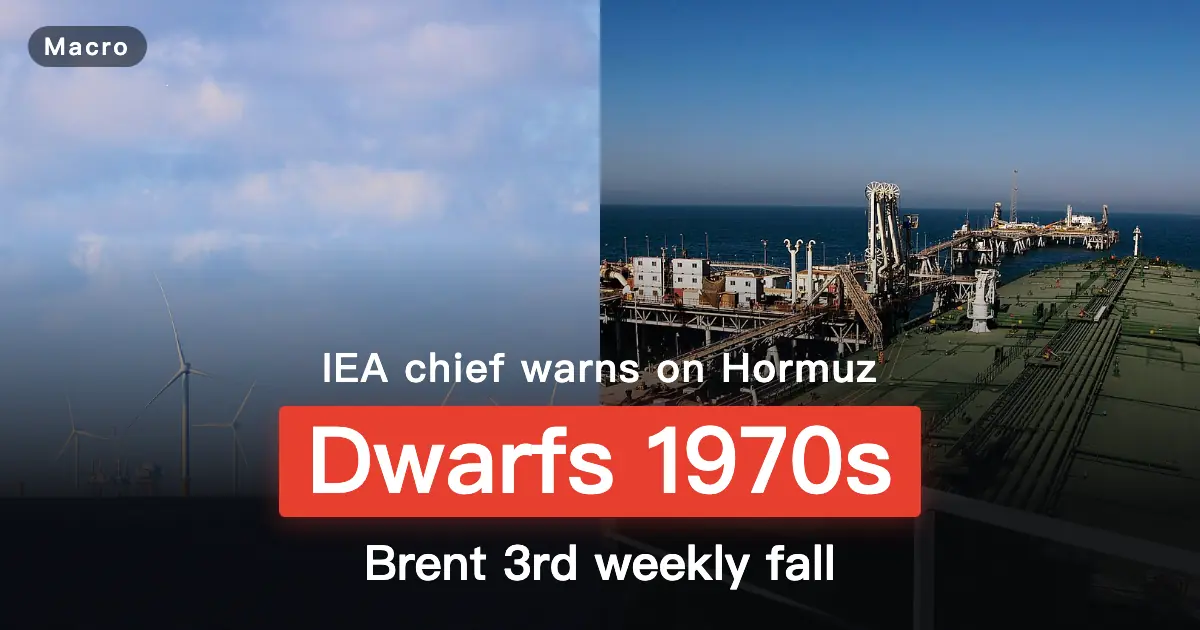
Part of our Nov. 22, 2026, brief. Written Nov. 23 from original sources.
The IEA called the Hormuz crisis the biggest energy security threat on record, even as oil prices fell for a third week.
Key points
- IEA chief Fatih Birol called the Hormuz crisis the largest threat to energy security in history, according to AFP, Euronews and CNBC.
- The World Energy Outlook 2026, released Nov. 19, added two scenarios in which the Middle East crisis persists, AFP reported.
- Brent settled at $92.57 and December WTI at $83.98 on Nov. 20, both heading for a third weekly loss, CNBC reported.
Birol says the crisis is bigger than the 1970s shocks
The International Energy Agency (IEA) released its flagship World Energy Outlook 2026 on Nov. 19, according to AFP, as published by France 24. In the foreword, Executive Director Fatih Birol called the Strait of Hormuz crisis the largest threat to energy security in history, dwarfing the oil shocks of the 1970s, Euronews reported.
The crisis began with U.S. and Israeli strikes on Iran in February, according to Euronews and AFP. Before the crisis, the strait carried about one-fifth of the world's oil shipments.
Consumers and high prices are now absorbing the shock because other buffers have been used up, Euronews reported, citing the report. "The longer the crisis lasts, the deeper its effects," Birol said, according to Euronews.
No path back to February, Birol writes
In a guest column in The Economist on Nov. 18, Birol wrote that he did not see "any credible pathway" back to the situation in February 2026, CNBC reported. "It can happen again," he wrote, adding that confidence in the strait as a safe and reliable corridor "has been crushed."
Gulf crude exports in October were above 80% of prewar levels, CNBC reported, citing the IEA's November oil report. Birol pointed to new pipelines in Saudi Arabia and the United Arab Emirates that bypass the strait, and said many IEA members relied on emergency oil stocks. Southeast Asian countries such as the Philippines and Thailand, the hardest hit, are looking to build similar buffers, CNBC reported.
Two new scenarios for a longer crisis
The outlook has long used three scenarios: one based on current policies, a middle one based on announced policies and a net zero by 2050 path, AFP reported. This year it added two scenarios in which the Middle East crisis continues. The reports did not give figures for the new scenarios, so Baomazai does not estimate them.
In the middle scenario, global oil demand peaks around 2030 and then eases, while natural gas demand keeps rising until about 2035, according to AFP. Birol expects the crisis to speed a shift to domestic solar and wind power and revive interest in nuclear energy, CNBC reported.
Market reaction
Oil prices did not match the warning. Brent futures settled at $92.57 a barrel on Nov. 20, up 0.64%, and December WTI at $83.98, up 0.93%, CNBC reported. Brent was on track for a weekly decline of nearly 4% and WTI about 5%, a third straight weekly loss for both.
CNBC tied the drop to expectations of a supply surplus, with crude shipments through Hormuz back to roughly prewar levels. Risks remain. Iran's Revolutionary Guards Navy said two tankers hit naval mines in the strait, and UOB Group analysts put incidents involving tankers at roughly one a day in November, CNBC reported.
Euronews described Hormuz as still blockaded by Iran, while CNBC said crude flows had nearly recovered. Both are media accounts, and Baomazai reports them side by side.
What to watch
- Nov. 29: OPEC+ ministers meet; CNBC reported they will set 2027 output policy.
- Tanker incidents in the Strait of Hormuz and U.S.-Iran talks; a BNP Paribas strategist said traders see a possible deal as long as the two sides keep talking, CNBC reported.
Sources
- MediaFrance 24 (AFP): Middle East crisis poses 'largest threat' to energy security in history, warns IEA (Nov. 19, 2026)
- MediaEuronews: Middle East conflict poses biggest threat to global energy security in history, IEA warns (Nov. 19, 2026)
- MediaCNBC: IEA chief sees no 'credible pathway' back to pre-war normality in the Strait of Hormuz (Nov. 18, 2026)
- MediaCNBC: Oil prices set for third straight weekly decline on Middle East export flows (Nov. 20, 2026)
FAQ
How did the IEA describe the Hormuz crisis?
IEA Executive Director Fatih Birol called it the largest threat to energy security in history, dwarfing the oil shocks of the 1970s, according to AFP and Euronews. He said he saw no credible pathway back to the energy world before the crisis.
What does the report say about oil and gas demand?
In the middle scenario, based on announced policies, global oil demand peaks around 2030 and then eases, while natural gas demand keeps growing until about 2035, AFP reported. The report added two scenarios in which the Middle East crisis lasts longer.
Why were oil prices falling?
Brent settled at $92.57 and December WTI at $83.98 on Nov. 20, both heading for a third weekly loss, CNBC reported. It said crude shipments through the Strait of Hormuz had returned to roughly prewar levels, though attacks on tankers continued.
For information only; not investment advice.
Spotted an error? Email editor@baomazai.com to tell us (the email will include this story’s link). We fix confirmed errors within 24 hours and log them on the corrections page.
Also in our Chinese edition: IEA:荷莫茲危機規模超越1970年代石油衝擊